The most common question finance leaders ask when reviewing their month-end process is a straightforward one: how do we close faster without sacrificing accuracy? Financial close automation is the most direct answer available to multi-entity enterprises. Rather than compressing timelines by working longer hours or adding headcount, automation removes the structural bottlenecks that make manual close processes slow, error-prone, and difficult to audit. Understanding what that automation actually involves, and which capabilities carry the most weight, is the starting point for any serious close transformation.
Why Manual Financial Close Processes Create Compounding Risk
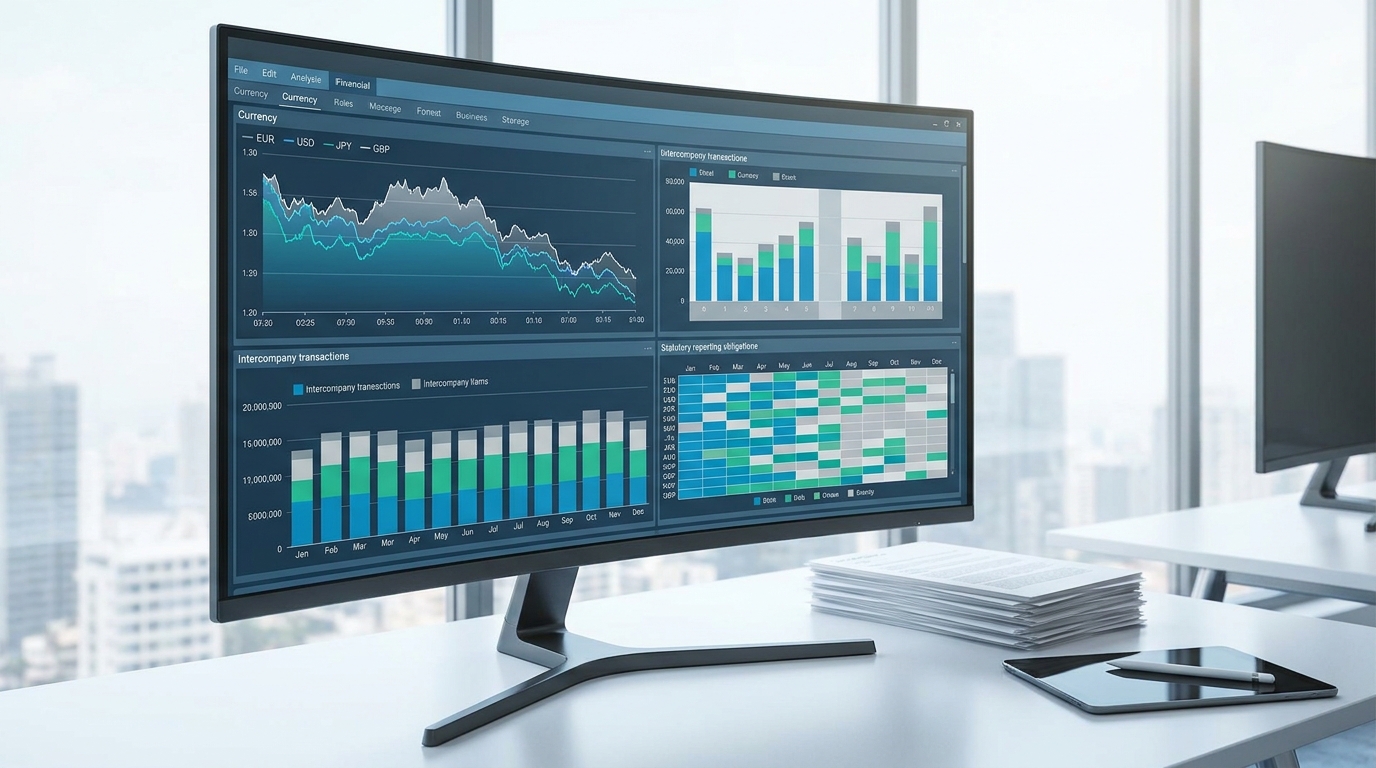
For a single-entity business with a small finance team, a manual close is inconvenient. For a multi-entity enterprise managing multiple currencies, intercompany transactions, and statutory reporting obligations across several jurisdictions, it is a material operational risk.
The core problem is dependency. Manual processes rely on individuals collecting data from disconnected systems, reconciling balances through spreadsheets, chasing confirmations across business units, and then consolidating outputs that were never designed to connect. Each step introduces a potential failure point. When one team is delayed, every downstream task waits.
Reporting accuracy suffers in parallel. Figures entered manually are subject to human error, and those errors compound across entities. By the time a consolidation pack reaches the CFO or the board, the numbers may have passed through a dozen different hands and an equal number of spreadsheet versions. Identifying which version is correct, and why it differs from the last, consumes time that should be spent on analysis.
There is also the audit trail problem. Regulators and auditors expect a clear, traceable record of how figures were derived, adjusted, and approved. Spreadsheet-based processes rarely produce that record cleanly. Finance teams end up reconstructing the close narrative after the fact, which increases compliance exposure and audit preparation time.
The Financial Close Automation Capabilities That Matter Most

Automation does not mean replacing finance professionals with software. It means removing the low-value, high-risk manual work so that finance teams can focus on interpretation, planning, and decision support. The following four capabilities represent the areas where automation delivers the most measurable improvement in close speed and reporting quality.
1. Automated Intercompany Reconciliation
Intercompany transactions are one of the primary causes of close delays in multi-entity organisations. When Entity A records a sale to Entity B, both entities need to agree on the value, timing, and classification of that transaction before consolidation can begin. In a manual environment, this agreement is reached through email chains, spreadsheet comparisons, and back-and-forth between finance teams who may be operating in different time zones or currencies.
Automated intercompany reconciliation eliminates most of that coordination overhead. The system matches transactions across entities in real time, flags discrepancies automatically, and routes exceptions for human review rather than requiring manual comparison of every line. The result is that intercompany balances are substantially resolved before the formal close period begins, rather than dominating it.
The downstream effect on consolidation is significant. When intercompany balances are clean, the elimination process is faster and the consolidated accounts are more reliable. If you want to understand the mechanics of this in more detail, the post on how intercompany reconciliation eliminates delays and errors covers the process in practical terms for enterprise finance teams.
2. Automated Reclassifications and Journal Entries
A significant portion of every close cycle involves recurring adjustments: accruals, prepayments, depreciation entries, and reclassifications that follow the same logic every period. In a manual process, these are entered individually, reviewed individually, and approved individually. The time cost is real, and so is the error risk, particularly when staff are under pressure to close quickly.
Automated financial close software handles recurring journals through rules-based processing. Once the logic is configured, the system generates and posts the entries automatically based on defined triggers, whether that is a calendar date, a balance threshold, or a transaction type. Finance teams review outputs rather than creating them from scratch, which is both faster and less error-prone.
This also supports a cleaner audit trail. Every automated entry is logged with its source rule, the data that triggered it, and the timestamp of posting. Auditors can trace any figure back through the system without requiring the finance team to reconstruct the reasoning manually.
3. Pre-Configured Statutory and Management Reports
One of the least visible but most time-consuming elements of the manual close is report production. Finance teams often spend significant hours after the numbers are finalised simply formatting and assembling reports for different audiences: statutory accounts for regulators, management packs for the board, segment reports for business unit heads.
Automated financial close software supports pre-configured report templates that pull directly from the consolidated data. When the close is complete, reports are generated automatically in the correct format for each audience. The finance team’s role shifts from data assembly to narrative and commentary, which is where their expertise adds the most value.
For enterprises operating across multiple jurisdictions, this capability is particularly important. Statutory reporting requirements vary by country, and maintaining manual templates for each is a significant burden. Pre-configured statutory reports, built to the relevant regulatory standards, reduce that burden and lower the risk of non-compliance through formatting or calculation errors.
4. Multi-Currency Consolidation
For any enterprise with operations in more than one currency, consolidation involves translation adjustments, exchange rate management, and the allocation of currency gains and losses. Handled manually, this is a technically complex and time-sensitive process. Exchange rates need to be sourced, applied consistently across entities, and documented for audit purposes. Errors in currency translation can materially misstate the consolidated accounts.
Automated multi-currency consolidation applies exchange rates systematically, handles translation differences according to configured accounting policies, and produces the currency reconciliation that auditors require. The process that might take a finance team several days to complete manually can be reduced to a process that runs in hours, with the added benefit of consistency across every period.
From Manual to Automated: A Realistic Expectation for Close Cycle Reduction

Finance leaders understandably want to know what automation actually delivers in practice. The honest answer is that it depends on the starting point, the complexity of the entity structure, and how thoroughly the automation is implemented.
That said, the pattern is consistent. Enterprises that move from largely manual close processes to an integrated automated platform typically find that their close cycle compresses meaningfully in the first year of operation. A process that previously took fifteen to twenty business days often reaches eight to twelve days within the first twelve months, with further improvement as configurations are refined and the team’s familiarity with the platform increases. Enterprises with particularly high intercompany transaction volumes tend to see the sharpest reductions, because automated reconciliation removes what was previously the longest single bottleneck.
The secondary gains are equally important. Faster close cycles mean that management information reaches decision-makers sooner, which improves the quality of planning and forecasting. Finance teams that previously spent most of their close period in data collection and reconciliation begin to spend that time on analysis, commentary, and forward-looking work. That shift in how finance resource is used is often cited by CFOs as the most valuable outcome of close automation, beyond the headline reduction in days-to-close.
Monthly Financial Close Best Practices for Enterprises Considering Automation
Automation amplifies whatever process discipline already exists. Enterprises that begin an automation project without first reviewing their close process often find that they have automated an inefficient workflow rather than improved it. These considerations matter before implementation begins.
- Map the current close process in full. Identify every task, its owner, its dependency on upstream data, and its typical completion time. This map will reveal where the genuine bottlenecks sit and which automation capabilities will have the highest impact.
- Standardise the chart of accounts across entities before consolidation. Automated consolidation depends on consistent account structures. Entities that use materially different classifications create exceptions that require manual intervention, which undermines the efficiency gains.
- Define intercompany transaction rules in advance. Automated reconciliation works best when the rules for matching transactions are clear and consistently applied. Agree on those rules with each entity’s finance team before going live, not during the close.
- Establish a close calendar with hard deadlines. Automation handles the processing, but it still requires data submissions from each entity. A close calendar with enforced deadlines, visible to all parties, prevents the late submissions that delay consolidation even when the system itself is ready.
- Configure reports before the first automated close. Pre-configured report templates need to be built and tested before they are needed. Running that process in parallel with a manual close, rather than during it, avoids the pressure that leads to poorly configured templates.
- Plan for exception management, not just automation. Automated processes will surface exceptions that previously went unnoticed. Finance teams need a clear process for reviewing, approving, and escalating exceptions so they do not become a new bottleneck.
These practices apply regardless of the software platform chosen. The underlying logic is that automation works best when the process it supports is well-designed and consistently followed.
Choosing the Right Automated Financial Close Software
Not all automated financial close software is built for the same use case. Point solutions that handle one element of the close, such as reconciliation or reporting, may be appropriate for simpler organisations. Multi-entity enterprises with complex intercompany structures, multi-currency consolidation requirements, and statutory reporting obligations across jurisdictions typically need an integrated platform that handles the full close cycle in a connected workflow.
Integration with existing ERP and planning systems is a critical consideration. A close automation platform that requires manual data extraction and re-entry from the ERP reintroduces the manual risk it was intended to remove. The platform should connect directly to source systems, pull data automatically at defined points in the close cycle, and write outputs back where required.
Scalability matters too. A platform that handles the current entity structure but cannot accommodate future acquisitions, new operating currencies, or additional reporting requirements will require replacement sooner than expected. The cost of migration is high, so the right choice is one that grows with the business rather than constraining it.
For more on what to look for when comparing financial consolidation and close software, the Adapt IT EPM Corporate Enterprise Performance Management offering covers the full scope of capabilities relevant to multi-entity finance teams, including close automation, consolidation, planning, and statutory reporting within a single integrated environment.
Enterprises looking to understand the broader financial planning and analysis context for close automation will also find value in the whitepaper on corporate financial planning and analysis, which addresses how integrated planning and reporting capabilities support better decision-making at the enterprise level.
The Business Case for Acting Now
Finance leaders often defer close automation projects because the current process, however painful, is functional. The close gets done, eventually. Reports go out, eventually. Audits pass, eventually.
The cost of that deferral is real, even if it is less visible than a project budget. Every manual close cycle consumes finance resource that could be redirected to planning, analysis, and business partnership. Every delayed report reduces the window available for management to act on the information. Every reconciliation error that reaches the consolidated accounts creates rework, reputational risk, and audit exposure.
The question is not whether financial close automation delivers value. For multi-entity enterprises, the evidence is consistent and the logic is straightforward. The question is how much longer the current process is allowed to constrain the finance function before that value is realised.
If you are ready to assess what automation could deliver for your organisation’s close process, book a demonstration with Adapt IT EPM to see how our Corporate Enterprise Performance Management solutions are built around the specific challenges of multi-entity financial close, consolidation, and reporting.

As the Professional Services Lead within the Adapt IT EPM division, Desmond brings 25 years of expertise to the table. Over the past 5 years at Adapt IT, his focus has been on delivering successful implementations and world class support on BOARD Technology and IBM Cognos Controller. This allows our clients to use a modern platform for their EPM solutions that drive efficiencies. Desmond’s responsibilities encompass Leading the Professional Services team in their implementations and support. He is deeply passionate about EPM solutions that improve budgeting, consolidation and reporting processes and he is an avid motorcycle tourer in his spare time.