
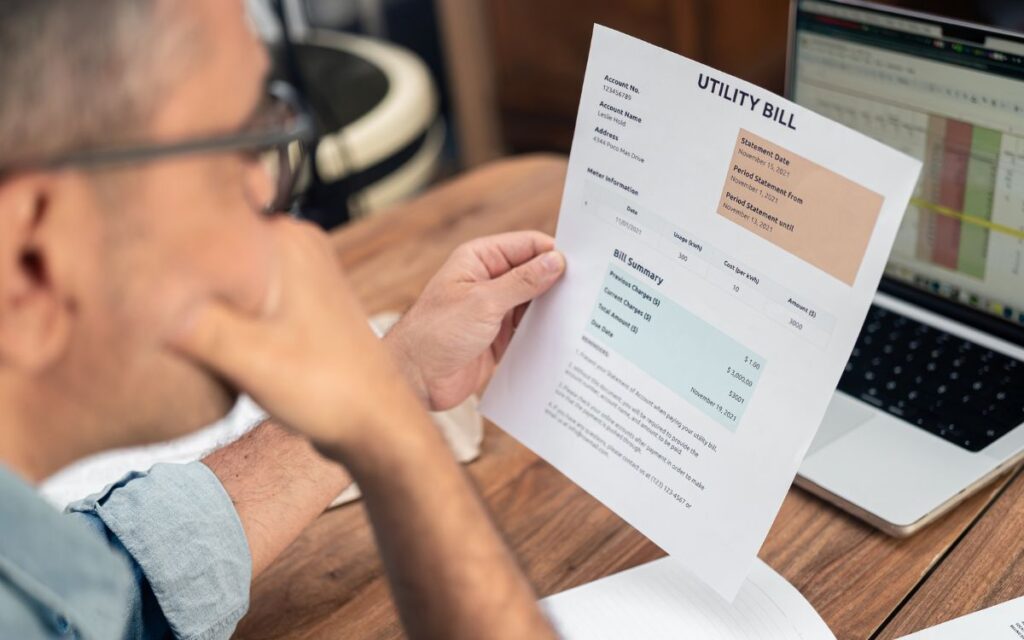
Automated utility invoice validation is a software-driven way to check your electricity, water, gas, and other utility bills against your contracts and actual usage, using AI invoice validation and automated data extraction to reduce errors and overpayments.
This means fewer surprises in operating costs, more control over cash flow, and better trust in the numbers feeding your forecasts and reports.
How Automated Utility Invoice Validation Works
At a high level, automated validation replaces manual checks with a repeatable, rules-based process:
- Data collection: Relevant data such as meter readings, contract terms, tariffs, tax rules, and past invoices is gathered from your utility providers, internal systems, or files.
- Data analysis: The software automatically analyses this data to look for patterns, unusual changes, and inconsistencies between usage, rates, and charges. It combines consumption data analysis with contract rate comparison to ensure your bills are correct.
- Discrepancy identification: It flags any differences between the billed amount and what should have been charged based on your contract, agreed tariffs, and actual usage.
- Error resolution: The system can automatically generate clear reports and alerts so your team can quickly discuss errors with the supplier, recover overpayments, and lock in corrections for future bills.
- Integration: Validated data can be automatically pushed into your accounting or ERP systems. Dashboards can then be used to track usage, costs, and trends in near real time, giving you better visibility across sites and business units.
Benefits of Automated Utility Invoice Validation
For most finance teams, utility bills are just a monthly cost line that gets paid and filed. But for a CFO, they are also a recurring source of leakage, risk, and noise in the numbers. Small errors, wrong tariffs, or outdated estimates can quietly add up across sites, countries, and cost centres.
And the market is already moving. 58% of organisations are already using a digital validation system — nearly double last year’s adoption rate (State of Validation 2025). That means manual-only validation is quickly becoming an outlier and a competitive risk.
Automated utility invoice validation turns this from a manual chore into a controlled process. It gives you consistent checks, clear evidence, and clean data you can trust in your reports and forecasts. Here’s what that means in practice:
Cost Savings
The system checks every invoice against contracts, tariffs, and past usage. It spots errors like wrong rates, incorrect estimates, or misapplied tax. This helps with overcharge prevention and energy cost management, preventing the same issue from recurring across future bills and locations.
Efficiency
Manual checking of multi-page invoices is slow and often skipped when teams are under pressure. Automation takes over this repetitive task, so your finance or shared-services team spends less time capturing data and more time on exception handling and value-add analysis.
Accuracy
People miss details, or apply rules inconsistently. Automated checks apply the same logic every time, across every invoice. This reduces the risk of human error, improves auditability, and gives you cleaner data for budgeting, forecasting, and performance reporting.
Ongoing Monitoring
Instead of occasional, ad hoc spot checks, automated validation runs continuously in the background. It creates a standard, year-round control over your utility spend, so trends, anomalies, and risks are picked up early rather than months later when the money is already gone.
Take the Next Step With Automated Utility Invoice Validation
Automated utility invoice validation helps you turn a messy cost line into a controlled, auditable, and optimised process. Book a demo to see how Adapt IT EPM can embed this into your broader performance management and cost-optimisation strategy.