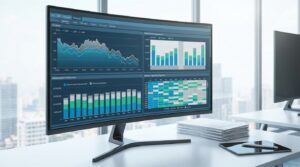
According to the Association for Financial Professionals (AFP) 2025 FP&A Benchmarking Survey, a staggering 96% of survey respondents use spreadsheets for planning, even with advanced software in place. Furthermore, while 71% of respondents use Enterprise Performance Management (EPM) tools quarterly, the continued high use of spreadsheets suggests these tools are not fully successful in their intended purpose. Traditional financial planning and analysis (FP&A) create data silos and disconnect departments. This leads to disjointed planning and missed opportunities for growth.
What if you could connect everything and everyone in your business? Extended planning and analysis (xP&A) is a modern approach that integrates planning across your entire enterprise. xP&A creates a unified, agile planning model for the entire organisation. It is the key to achieving real-time forecasting and strategic growth.

What is xP&A?
Extended Planning and Analysis (xP&A) is a modern approach to traditional Financial Planning and Analysis (FP&A). It is a system that integrates financial plans with operational plans across the entire business, connecting functions like supply chain and human resources. This integrated view provides more comprehensive Enterprise Performance Management (EPM), enabling better, faster business decisions.
A traditional FP&A model focuses only on financial data, such as sales forecasts and profit margins. With xP&A, you connect that financial data to operational plans across the entire business. It links finance, supply chain, marketing, operations and HR.
How xP&A Connects Your Business
Traditional planning methods often create a maze of disconnected spreadsheets. The finance department may work on a budget in isolation. At the same time, sales, marketing, HR, and operations each manage their own data.
This lack of communication leads to siloed information and fragmented strategies. Decisions are made without a complete picture of the business. This approach is slow, inefficient, and prone to error, limiting a company’s ability to respond to market changes.
xP&A integrates financial and operational data and creates a unified platform. Financial metrics are no longer separate from sales forecasts, operational KPIs, or HR data. Everyone across the organisation works from the same set of numbers.
Instead of spending hours validating over different datasets, teams can focus on what the numbers mean for the business.
Example of xP&A in Action
Imagine a retail company launching a new product. The marketing team plans a new social media campaign. At the same time, the supply chain team identifies a potential raw material shortage. The HR team models the need for additional staff for the holiday season.
With xP&A, these plans are connected in a single system. The company can ask, “What if the raw material shortage reduces production by 20%?” The system will instantly show the financial impact on revenue goals. It will also show how to adjust marketing and staffing plans to compensate. This allows for an agile response.
The benefits of this integration are clear:
- Enhanced Visibility: Teams gain a clear view of how their actions impact the entire business. A marketing manager can see how campaign spend directly correlates with sales revenue.
- Improved Agility: With real-time data, departments can react quickly to changes. They can adjust budgets and plans on the fly, avoiding costly delays.
- Better Strategic Alignment: When all teams are looking at the same data, they can align their goals more effectively. This ensures everyone is working towards the same objectives.
Departments no longer operate in isolation; they are a connected, agile ecosystem.

Make Better Decisions, Faster
Traditional planning operates on a slow, reactive cycle. This means companies plan annually or quarterly, then simply react to changes as they happen. This method is slow and often based on outdated information. It leaves businesses vulnerable to market shifts and unexpected disruptions.
xP&A enables a dynamic planning process where you can update forecasts and plans in real time.This is all possible because xP&A provides a unified data foundation. It brings together data from all departments. This gives you a complete, up-to-the-minute view of your business.
Advanced analytics on this consolidated data deliver deeper insights. For example, you can identify a downturn in sales in a specific region and immediately see its impact on the company’s overall revenue forecast and inventory levels.
Consider a manufacturing business dealing with load shedding. With xP&A, the company can model various scenarios and instantly see how a stage 4 outage will impact production targets and costs. This allows them to adjust their supply chain or shift production schedules.
This quick, data-driven response helps the business navigate disruptions with minimal impact. It can instantly adjust its operational plan, from shifting production schedules to optimising energy usage, to mitigate the financial risk.
The Business Benefits of xP&A
- Team Alignment: Instead of working in separate silos, teams can share data and insights in real time. This ensures everyone is working towards the same goals. This approach reduces friction and improves communication across the organisation.
- Scalability: Modern xP&A solutions can handle more data and more users without losing efficiency. This makes it a future-proof investment. It supports strategic planning and analysis for companies of any size.
- Operational Efficiency: xP&A streamlines many processes. It eliminates manual tasks and reduces human error. This leads to better resource utilisation and improved overall efficiency with automated data collection and reporting. This increased efficiency directly impacts the bottom line.
- Return on Investment (ROI): These operational and strategic benefits translate into a clear return on investment. By streamlining processes, you cut down on costs. By improving data accuracy, you prevent costly errors. And by enabling smarter, faster decisions, you create new revenue opportunities.
For example, a rolling forecast can be instantly updated based on recent sales performance and operational changes across the business. If the sales team sees a 5% drop in quarter one, the system immediately projects the impact on future quarters and suggests necessary budget and inventory adjustments for the supply chain and operations teams. This continuous, agile planning replaces rigid annual budgeting, ensuring better resource allocation and a clearer ROI.
What’s Next? The Future of Planning
xP&A is the foundation for more advanced technologies. It creates a data-rich environment that powers AI and machine learning. This foundation allows you to move beyond simple reporting with a proactive and intelligent approach to financial management.
Modern xP&A solutions enable predictive analytics. It helps you explore various scenarios and their and their potential outcomes.
You can see how entering a new market would affect your profitability. You can even model how a potential economic downturn or a new competitor’s launch might affect your business. Embracing xP&A is an investment in your company’s long-term growth and stability.

Ready to Connect Your Enterprise?
Modern businesses need a modern approach to planning. xP&A enables integrated business planning and cross-functional forecasting. This leads to faster, more confident decisions, increased efficiency, and a clear ROI.It’s time to streamline your operations and empower your finance team with smarter technology. Request a demo today to see how Adapt IT EPM can help you embrace xP&A.

As the Professional Services Lead within the Adapt IT EPM division, Desmond brings 25 years of expertise to the table. Over the past 5 years at Adapt IT, his focus has been on delivering successful implementations and world class support on BOARD Technology and IBM Cognos Controller. This allows our clients to use a modern platform for their EPM solutions that drive efficiencies. Desmond’s responsibilities encompass Leading the Professional Services team in their implementations and support. He is deeply passionate about EPM solutions that improve budgeting, consolidation and reporting processes and he is an avid motorcycle tourer in his spare time.